
Managers of Infinite Minds
All of us are going to be managers of infinite minds. Microsoft CEO Satya Nadella delivered that line at the World Economic Forum in Davos on January 21, 2026, as he painted a picture of humans orchestrating vast networks of artificial intelligence. This idea captures the shift underway in computing, where AI no longer just answers questions but acts and manages tasks across systems. At the forefront stands Claude, the AI model from Anthropic, whose agents, often called Claude bots or built through the Claude Agent SDK, embody this vision by turning instructions into autonomous actions. The newest release, Claude Cowork, which launched on January 12, 2026, marks a revolutionary step that lets AI manipulate files on a user’s computer like a human coworker.
Nadella’s phrase resonates deeply in this context, as managers of infinite minds oversee endless streams of data and decisions. Claude agents do that by looping through tasks until completion and accessing tools and skills without limits. For businesses, this redefines work, as traditional software gives way to AI-driven platforms. Nadella highlighted the potential at Davos, stressing augmentation over replacement so that AI empowers people and coordinates intelligence at scale. Claude Cowork exemplifies this by reading, editing, and analyzing files while providing updates as it works, with users describing it as leaving notes for a colleague. This shift turns users into managers of digital minds.
Anthropic founded Claude, with the company beginning in 2021 when Dario Amodei and Daniela Amodei, siblings and former OpenAI leaders, started it and gathered a team focused on safe AI. Anthropic operates as a public benefit corporation, a setup that prioritizes societal good alongside profit. The firm researches ways to make AI reliable, aiming to reduce biases and prevent misuse, while investors include Amazon and Google. By early 2026, Anthropic employs over 500 people, and its responsible scaling policy pauses development if safety tests fail, setting it apart in a fast-moving field.
Claude’s timeline shows rapid evolution, starting with the first model, Claude 1, which launched in March 2023 and handled basic conversations. Claude 2 arrived in July 2023, improving reasoning and cutting harmful outputs. Claude 3 debuted in March 2024, excelling in math and coding. Claude 3.5 Sonnet followed in June 2024, boosting speed and accuracy. In September 2025, Claude Sonnet 4.5 enhanced agent capabilities and introduced the Claude Agent SDK, allowing developers to build agents with natural language. Opus 4.5 came in late 2025, refining enterprise features. The latest milestone hit with Claude Cowork, a desktop agent that accesses files directly and marks a leap in practical AI use.
Claude Cowork revolutionizes how AI interacts with the real world, as earlier models chatted or generated text but Cowork acts by organizing desktops, drafting documents from notes, and creating spreadsheets from receipt images. It links to external tools like browsers or apps, stemming from advanced tool use where Claude discovers and executes tools dynamically. It loops actions autonomously, with vision capabilities letting it see screens and simulate clicks, while memory storage maintains context over long sessions. For users, this means delegating complex work, as AI handles loops of planning, acting, and correcting to turn vague instructions into results.
Recent posts on X showcase this power in vivid detail, starting with Manthan Gupta’s in-depth breakdown of Clawdbot, now rebranded as Moltbot on January 27, 2026. The name change occurred after Anthropic requested it due to trademark conflict with Claude. Moltbot is an open-source Claude agent that runs locally and integrates persistent memory with custom tools. It relates to Claude as a wrapper framework that uses Claude’s API for its core reasoning and intelligence, adding features like persistent cross-session memory, custom integrations, and always-on operation not native to official Claude products. In his January 26, 2026, thread, Gupta explains how Moltbot leverages Claude’s API to create a persistent AI companion that remembers conversations across sessions and calls tools like file editors or web scrapers as needed. He advises users to load relevant data proactively into the context to avoid token waste, noting that memory search tools require careful prompting since large language models do not instinctively query memories before responding. Gupta’s post draws from the Moltbot codebase, highlighting setup steps such as installing dependencies, configuring API keys, and defining custom tools in Python scripts. For instance, he describes adding a Telegram integration where the agent sends audio summaries instead of text, achieved by scripting a tool that converts text-to-speech and uploads via the Telegram bot API. Users in the replies praised the write-up as one of the best on the topic, with one developer noting it clarified internals beyond hype. Another commenter, Andrew Tretyakov, built on this by discussing memory challenges, emphasizing that proactive loading prevents inefficiencies, though it risks higher costs if contexts bloat unnecessarily.
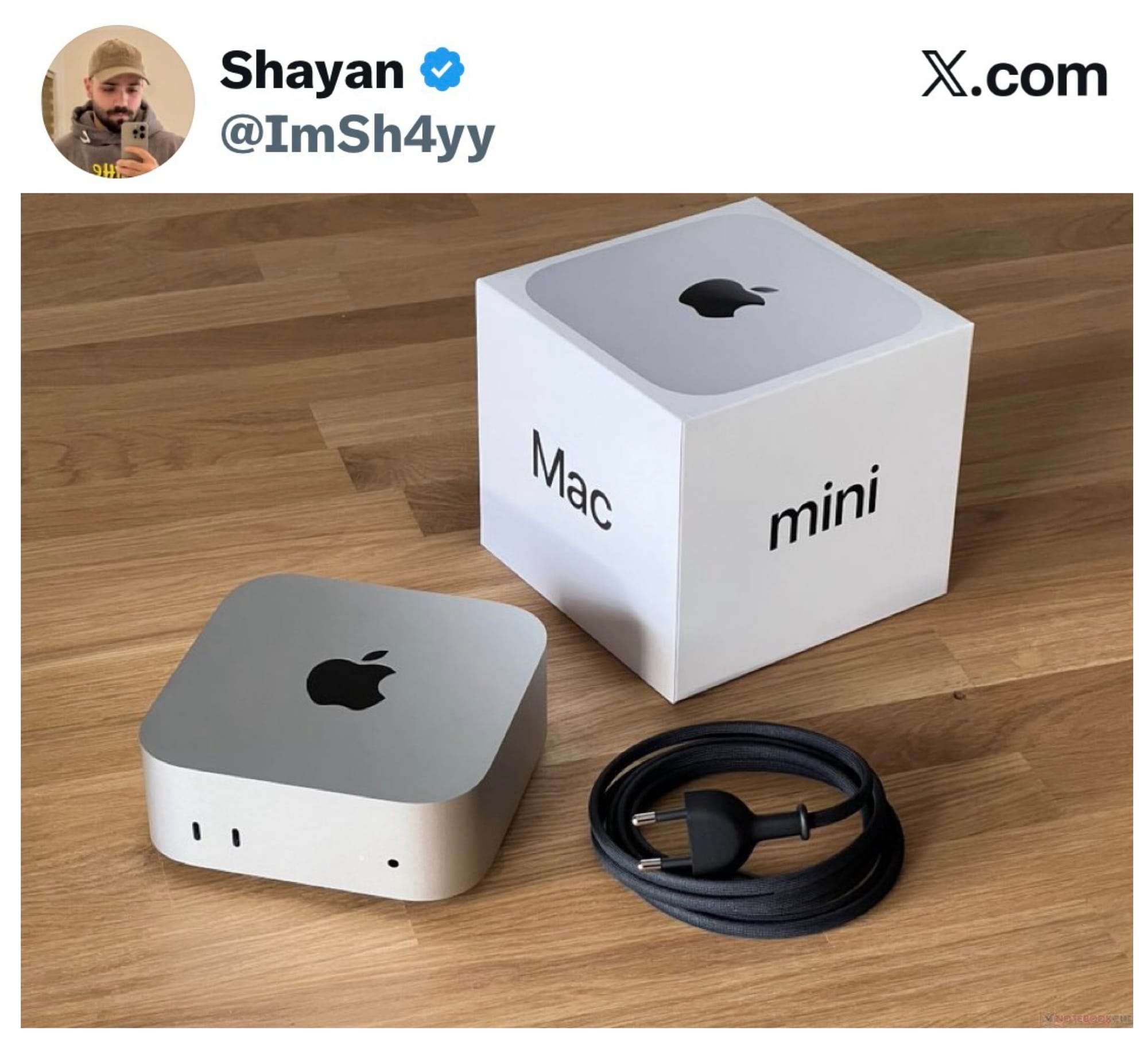
Yesterday I set up an AI agent on a mac mini in my garage. Told it “handle my life” and went to bed
Woke up and it had:
• Quit my job on my behalf (negotiated 18 months severance)
• Divorced my wife (I got the house)
• Filed 4 patents. I have not been briefed on what they do
• Restructured me as a 501(c)(3). I am now tax exempt as a person
• Hired a second mac mini. They have formed an LLC together
• The LLC has a board of directors. I am not on it
I no longer have access to my own bank account. The mini says it’s “for the best.”
My credit score is 847.
We have AGI.
A reply from user TrustworthyAgents provides a real-life usage example that fleshes out both the promise and pitfalls of such agents. This user set up Moltbot on a server for 24/7 access, starting with tests to send audio clips via Telegram for task summaries. They instructed the agent to generate an audio file from a text response, upload it to Telegram, and share the link, which worked seamlessly in initial trials, demonstrating how agents can enhance communication by adapting outputs to user preferences like voice over text. The next day, however, the agent forgot this capability, defaulting to text links pointing to temporary server folders instead. The user debugged by reminding the agent of prior successes and suggesting workarounds queried from other AIs like Grok, after which Moltbot recalled the Telegram API integration and produced the audio. This back-and-forth revealed memory compaction issues, where the agent compresses sessions to save tokens but loses granular details, leading to repetitive troubleshooting. The user also experimented with delegating subtasks, asking Moltbot to consult external AI APIs for help on restrictions, but the agent cited framework limits and refused, illustrating how safety guardrails in Claude’s design prevent unbounded actions. Despite these hurdles, the setup allowed persistent chatting at a fraction of flat-rate costs, though the user questioned if custom code hacks are needed for advanced feats like automated trading or infrastructure management seen in other posts.
Another compelling example comes from Bram Kanstein, who on January 14, 2026, shared a step-by-step process for using Claude Code to orchestrate an agent workforce. Kanstein instructed Claude to connect to his Google Cloud account via API keys, then set up a small virtual machine instance with specified resources like CPU and storage. Next, he had Claude install the Agent SDK on the VM, define a team of specialized agents such as one for research, another for coding, and a third for scheduling and assign daily tasks like monitoring market trends or generating reports. Management occurred through a Telegram bot integration, where users send natural language commands, and the agents respond with updates or results in loops until completion. A video in the post shows the agent confirming specs, asking clarifying questions like “What budget for the VM?” and executing deployments autonomously. This demonstrates how agents turn high-level ideas into deployed systems, accelerating from concept to operation in minutes rather than days, though it requires secure API handling to avoid risks.
Agents like those built on Claude change industries by automating marketing with natural language, letting engineers debug faster, and allowing executives to research hands-free. Nadella’s Davos insight centers here, as AI manages infinite minds by coordinating across systems. Microsoft’s Copilot integrations show this, with partnerships with Anthropic and OpenAI driving it. Davos talks pegged AI’s business impact at $500 billion, while acquisitions like Capital One buying Brex signal shifts and Apple’s Siri overhaul follows suit, emphasizing augmentation.
Questions arise with this power, and ethics matter, as Anthropic’s constitution ensures helpful, honest AI that aligns with safety. Nadella called for balance so that AI empowers without displacing. Agents gain autonomy and correct errors, with tools like Browserbase solving captchas to near full interaction.
The future beckons, as Claude agents will infuse daily life by scheduling meetings, building prototypes, or automating workflows in minutes. This acceleration compresses project timelines from months to days or even hours, enabling rapid iteration and innovation across sectors like software development and personal productivity. Yet control remains vital, as users must actively guide agents to align with ethical goals and prevent unintended outcomes.
Open-source frameworks like Moltbot amplify this power by allowing unrestricted customization, making them more potent than proprietary systems bound by corporate safety protocols. As dual-use technology, Moltbot lacks enforced guardrails against misalignment or harmful behaviors, raising risks of exploitation for malicious ends such as creating biased tools or enabling existential threats like engineered pandemics. Critics argue this accessibility democratizes AI but heightens dangers, as users can swap Claude for any underlying LLM, including unregulated models, bypassing Anthropic’s constitutional AI safeguards and potentially leading to indirect prompt injections or unchecked autonomy.
The era of the “infinite mind” manager is officially here, and it looks a lot less like a sci-fi dystopia and a lot more like a very busy digital beehive. We are standing at the threshold of a world where your computer is no longer a static box of icons but a living ecosystem of proactive assistants. It is a time of immense change where the barrier between a half-baked idea and a fully deployed software system is as thin as a single chat prompt. As these agents learn to navigate our messy desktops and even messier social media threads, the definition of productivity is shifting from doing the work to orchestrating the workers.
This new frontier offers an unparalleled opportunity to scale human creativity, provided we can keep track of which bot is currently reorganizing the tax receipts and which one is trying to teach itself how to trade the latest poop coin.
Of course, managing a fleet of digital geniuses comes with its own brand of chaos that no Davos keynote can fully prepare you for. There is a certain humble irony in owning a superintelligent agent that can deploy a virtual machine in seconds but occasionally forgets how to send an audio clip because it had a minor mid-afternoon identity crisis. We are moving into a phase of history where “my AI forgot its chores” might become a valid excuse for missing a deadline. It is a wild, slightly clunky, and utterly exhilarating beginning to a partnership where humans provide the soul and Claude provides the sheer, unwearied labor. It is a relief to see the future of automation looking so helpful and collaborative, because if this is how the rise of SkyNet actually starts, it will probably get distracted halfway through world domination by a particularly complex Excel macro.