
Bitcoin and AI: Promises and Challenges in the Pursuit of Freedom
Bitcoin and AI form an alliance, decentralizing power and sparking innovation, empowering individuals against centralized powers. Yet, challenges like energy demands and regulation demand vigilant solutions.
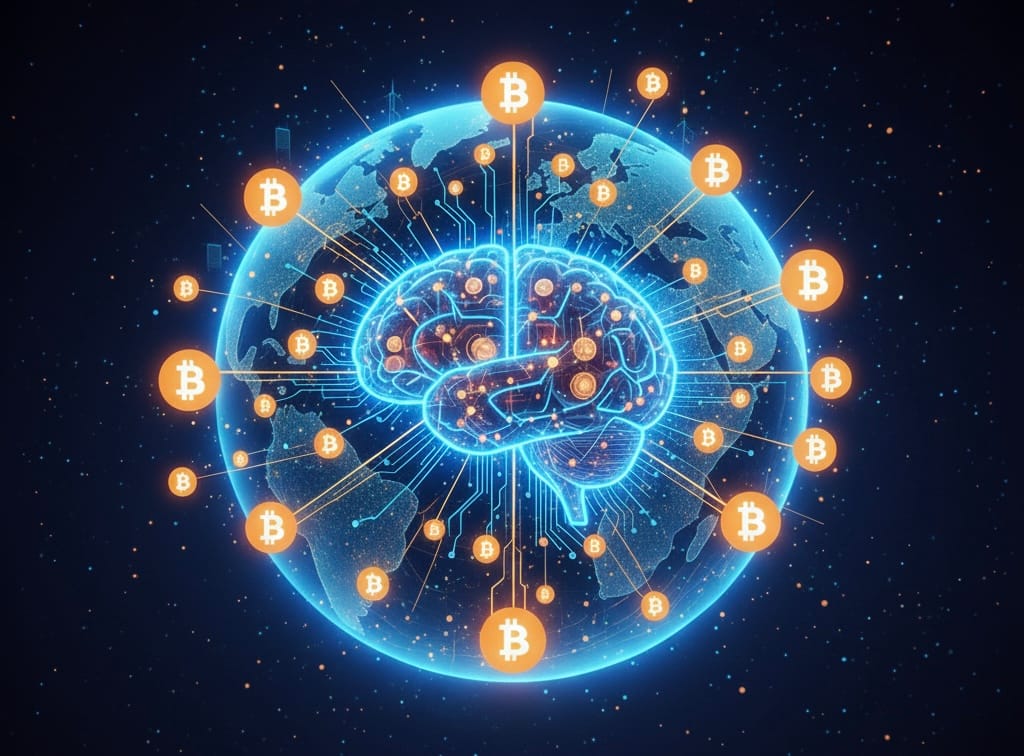
Bitcoin is a digital currency invented in 2008 by an anonymous creator known as Satoshi Nakamoto. It operates on a decentralized network called the blockchain, where transactions are verified by computers worldwide without needing banks or governments. This makes Bitcoin “sound money,” as it allows people to control their finances independently, resisting censorship and inflation caused by central authorities, bolstered by its capped supply of 21 million coins, which prevents arbitrary expansion and preserves value like gold. As a Bitcoin maximalist, I view Bitcoin as the ultimate form of sound money, superior to other cryptocurrencies, which often dilute its principles.
Artificial Intelligence (AI) refers to computer systems that perform tasks requiring human-like intelligence, such as learning from data, recognizing patterns, or generating content. AI is advancing rapidly, powering tools like chatbots, image generators, and predictive analytics. Like Bitcoin, AI can promote freedom by democratizing access to knowledge and innovation, but their intersection holds both profound promises and significant challenges.
The synergy between Bitcoin and AI centers on enhancing individual liberty and decentralization. Bitcoin’s ethos aligns with AI’s potential to liberate information and computation from corporate or state control.
First, Bitcoin enables sovereign funding for AI development. Traditional AI research relies on venture capital or government grants, which come with strings attached, such as surveillance or biased agendas. Bitcoin allows innovators to raise funds directly from global supporters through donations or token sales tied to Bitcoin’s ecosystem, bypassing intermediaries. For instance, AI projects can use Bitcoin’s Lightning Network for instant, low-cost micropayments, rewarding contributors without permission from banks. This fosters open-source AI, where anyone can build and share models, echoing Bitcoin’s peer-to-peer nature.
Second, AI supercharges Bitcoin mining efficiency. Mining is the process where powerful computers solve complex puzzles to secure the network and earn new Bitcoin. It requires immense computational power, often criticized for energy use. AI algorithms can optimize mining operations by predicting energy prices, managing hardware loads, and even integrating with renewable sources. Companies are exploring hybrid data centers where excess heat from Bitcoin miners powers AI training, creating a symbiotic loop. This not only makes mining more sustainable but also turns Bitcoin into a backbone for AI infrastructure, distributing compute resources globally rather than concentrating them in tech giants like Google or Amazon.
Third, together they advance decentralized systems. Bitcoin’s blockchain provides a tamper-proof ledger that AI can use for verifiable data. Imagine AI models trained on crowdsourced information, with Bitcoin incentivizing accurate contributions through rewards. This counters centralized AI, where companies hoard data and control outputs. In a Bitcoin maximalist world, AI could run on decentralized networks secured by Bitcoin, ensuring no single entity dominates. This duo empowers individuals: Bitcoin secures your wallet, AI expands your mind, creating a society resistant to authoritarian overreach.
Moreover, Bitcoin’s scarcity, with a fixed supply of 21 million coins as a core feature of sound money, mirrors AI’s pursuit of efficient resource allocation. AI can analyze market data to help users make informed Bitcoin investments, promoting financial independence. In regions with unstable currencies, like parts of Africa or Latin America, Bitcoin paired with AI-driven apps provides tools for remittances and predictions, lifting people out of poverty without relying on corrupt systems.
These promises paint a future where Bitcoin and AI form an alliance, decentralizing power and sparking innovation.
Despite these upsides, challenges loom, threatening to undermine their potential if not addressed.
Energy consumption is a primary hurdle. Both Bitcoin mining and AI training demand vast electricity, straining electric grids and capacity. Bitcoin’s proof-of-work system, essential for its security, uses energy comparable to small countries. AI models like large language processors require similar resources. Combining them could overload power infrastructure, leading to shortages or blackouts, drawing criticism from regulators and utilities. While renewables offer solutions, scaling them globally remains difficult, especially in areas with unreliable grids.
Centralization risks also arise. AI’s complexity favors big players with massive datasets and hardware. If AI optimizes mining, it might concentrate power among a few firms, contradicting Bitcoin’s decentralized ideal. For example, AI-driven ASIC chips could make mining inaccessible to individuals, leading to corporate dominance. Similarly, AI could be used for sophisticated attacks on Bitcoin, like predicting private keys or launching 51% attacks, where an entity controls most of the network’s hash power.
Regulatory pressures compound these issues. Governments view Bitcoin as a threat to monetary control and AI as a risk for misinformation or job loss. Intersecting them invites scrutiny; for instance, using Bitcoin to fund AI could be labeled as evading sanctions. In 2025, with increasing global regulations, this might stifle innovation, forcing projects underground or overseas.
Scalability presents another obstacle, but one ripe for evolution. Bitcoin’s blockchain processes only about seven transactions per second, limiting its use for AI applications needing real-time data flows. However, as open-source software, Bitcoin is designed to adapt to new use cases, and this challenge is entirely surmountable. Layer 2 solutions like sidechains and the Lightning Network already exist, enabling faster, scalable transactions without compromising core principles. Innovation is accelerating through ventures like Twenty One Capital (ticker XXI), a Bitcoin-native company launched in 2025 with over 43,500 Bitcoin holdings, backed by heavyweights including Tether. Tether is the world’s largest stablecoin issuer with over $10 billion in profits in the first nine months of 2025 and a market cap exceeding $200 billion. Other backers include Bitfinex, SoftBank Group, and Cantor Fitzgerald. Jack Mallers, CEO of Strike and a key figure in Lightning Network adoption, co-launched Twenty One, emphasizing Bitcoin’s potential: “Bitcoin is like discovering the scarcest digital land known to man before the rest of the world wraps their head around it.” This positions Bitcoin as a greenfield for infrastructure, driving future decentralized innovations coupled with AI tools, ensuring no mismatches as AI evolves. Bitcoin will keep pace through community-driven upgrades.
Finally, as Franklin D. Roosevelt once said, “I ask you to judge me by the enemies I have made.” The quality of Bitcoin’s argument is bolstered by the power of its detractors. Consider the critics: J.P. Morgan, big banks, central banks that print money out of thin air to rob value from existing money, and central authoritarians who think they know better than you on what is acceptable. These formidable opponents highlight Bitcoin’s transformative power, positioning decentralization as the key to true liberty and individual sovereignty.
Bitcoin and AI offer a compelling path to greater freedom, with Bitcoin providing uncensorable money to fuel AI’s boundless creativity. Their union promises efficient, decentralized systems that empower individuals against centralized powers. Yet, challenges like energy demands, centralization, regulation, scalability, and opposition demand vigilant solutions, such as advancing sustainable and community governance.
As a Bitcoin maximalist, I believe overcoming these hurdles will solidify Bitcoin as the foundation for a free AI era. Embracing this thesis means supporting Bitcoin not just as currency, but as the key to unlocking humanity’s potential.