
Beyond the Bubble: Why the "Don’ters" See a Financial Crisis While the "Doers" See an Orbital Revolution
While critics decry an AI bubble, doers like Musk envision orbital revolution: Starlink’s 10K satellites, sub-hour global logistics, eclipsing WEF’s failed predictions.
The stock market is currently a battlefield of valuations, driven by a 16 percent surge in the S&P 500 throughout 2025. Names like Nvidia, Alphabet, Broadcom, and Microsoft are the engines of this movement. Naturally, this has triggered a predictable chorus of experts and academic observers who spend their days in ivory towers debating whether we are witnessing a transformative shift or an impending bubble collapse.
These critics love to point back to the dot-com era as a cautionary tale. Yet, if you look at the survivors of that period, the doers who actually built something, the results tell a different story. Amazon alone has surpassed the combined value of almost every failed enterprise from that era. While the talking heads were busy predicting doom, the risk-takers were building a future that eventually exceeded the total market capitalization of the very bubble the experts feared.
The Professional "Don’ters" and the Bubble Narrative
The argument for an AI bubble is a favorite pastime for the credentialed class. Howard Marks of Oaktree Capital Management was back at it in late 2025, claiming AI is shrouded in uncertainty. Then you have the Bulletin of the Atomic Scientists, a group that seems to find a doomsday scenario in everything, declaring that AI signals a catastrophic rupture.
Even the halls of Wharton and Yale are filled with people like Itay Goldstein, who use clinical terms like speculation and fundamental disconnects to describe markets they don't actually participate in. Richard Bove even went on CNN to scream that this bubble is 17 times larger than the dot-com crash. These people make a living being don’ters. They analyze, they warn, and they criticize, but they never actually create a single job or a single line of code.
The WEF: Architects of Command and Control
Then we have the pinnacle of irrelevance: the World Economic Forum (WEF). This club of detached elites loves to gather in opulent settings to lecture the rest of us on how to live. These are the same people who fly private jets to Davos to advocate for carbon footprints they have no intention of reducing themselves.
But the hypocrisy is only the surface. At its core, the WEF is a command and control entity. They are propped up by a class of people who believe individual liberty should be sacrificed at the altar of the collective good—a collective they happen to lead. They represent the root of modern oppression and stand as the total antithesis of liberty.
The WEF views the world as a spreadsheet to be managed rather than a frontier to be explored. They are the ultimate takers, extracting influence and power from the labor of others while contributing nothing to actual innovation. Their track record on policy is a graveyard of failed social engineering. Take their promotion of radical agricultural mandates in Sri Lanka, which led to a total collapse of crop yields and national bankruptcy. Or their 2018 prediction of an "AI job apocalypse" by 2022 that never arrived. Instead, the doers in the tech sector created more opportunities than ever before.
The intelligentsia continues to seek their opinion as if it holds weight, yet they are a relic of a dying era of top-down control. They are consistently proven wrong by the very innovation they try to regulate into submission.
The "Doers" Define the Reality
On the other side of the ledger are the people actually moving culture and innovation forward. Unlike the speculative ghosts of 1999, the AI advancement of today is built on concrete, staggering achievements. BlackRock noted in late 2025 that, unlike previous bubbles, these companies are producing genuine earnings and efficient funding.
Look at the numbers that the don’ters choose to ignore. Nvidia alone pulled in $57 billion in quarterly revenue late last year. This isn't a company selling clicks or eyeballs with no path to profit. This is the hardware powering the modern world. Janus Henderson pointed out that this surge lacks the deceptive accounting of the past. AI is being integrated into medicine, banking, and manufacturing by people who are actually doing the work.
The Multi-Stage Rocket to Orbit
Is AI a bubble about to pop? Maybe. But does that mean AI is not here to stay? Think of it like a SpaceX rocket. To get to orbit, you have to burn through multiple stages. The first stage might drop away in a fiery market correction, but that doesn't mean the mission has failed. It means we’ve reached the velocity needed for the next phase.
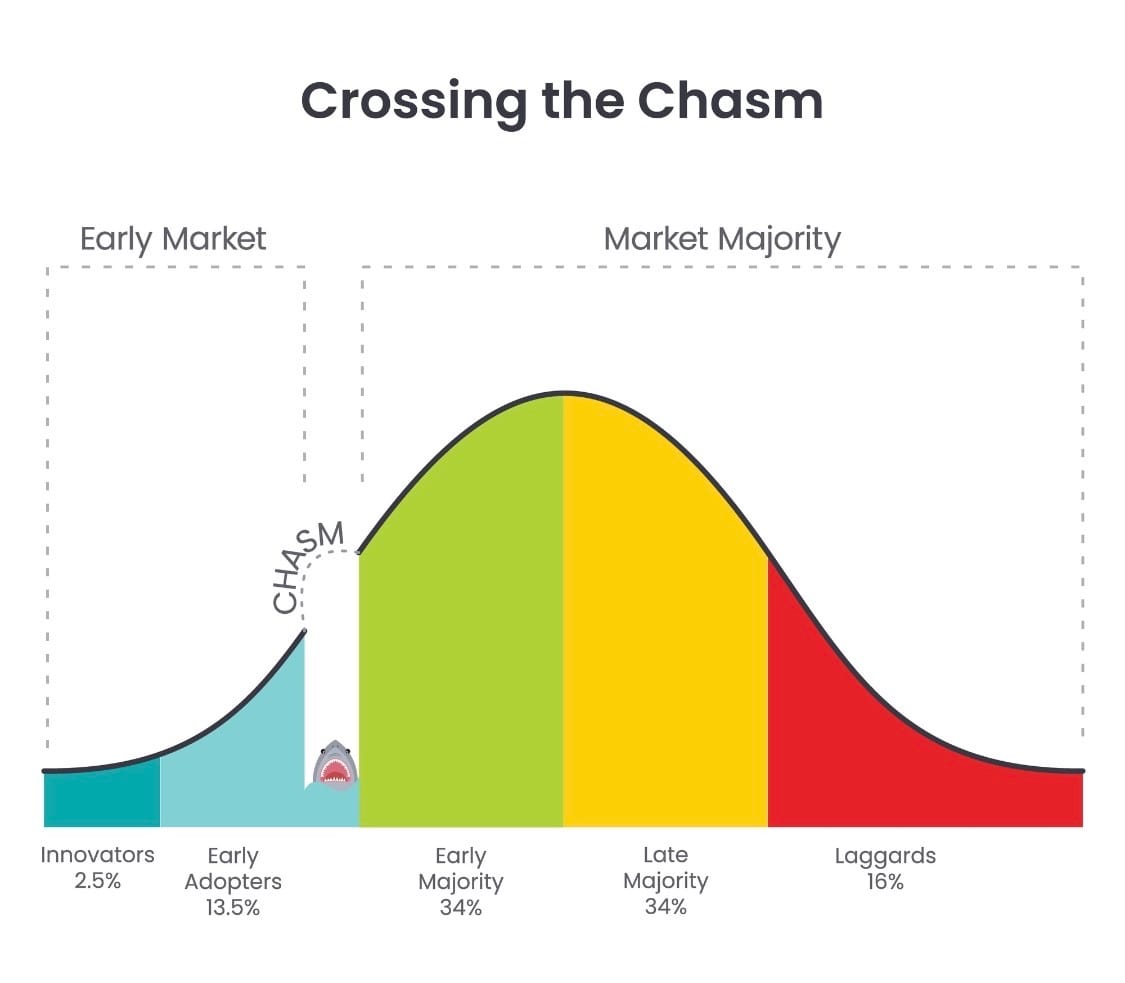
We are nowhere near the steep part of the S-curve. In engineering, the S-curve represents the lifecycle of a technology: slow initial growth, followed by a vertical explosion of adoption, before finally leveling off. Right now, AI is the pure oxygen being pumped into a burning engine, propelling humanity toward that vertical climb.
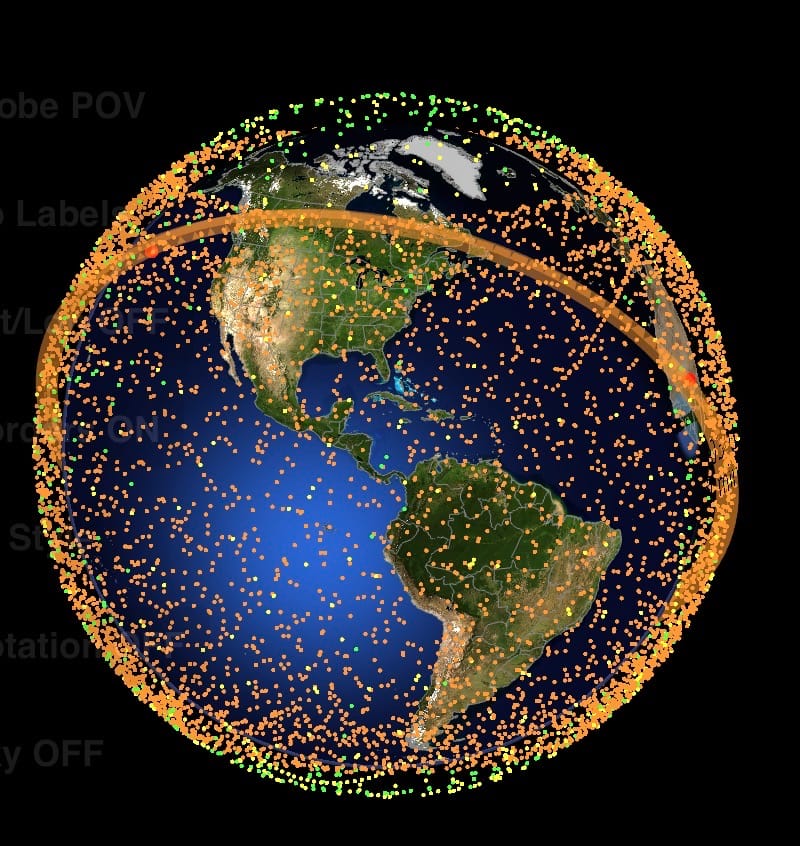
While the "experts" at the WEF worry about terrestrial energy limits, doers like Elon Musk are already looking over the horizon. Musk has stated that "serious AI scaling" has to "be done in space," envisioning a future where data centers and energy production move to orbit to solve the cooling and power problems that plague Earth. Is he crazy? Separate his politics from the engineering for a moment. SpaceX now has nearly 10,000 Starlink satellites in orbit and is launching rockets almost every other day.
A New Logistics for Humanity
The world is about to change yet again. Traditional air travel by companies like Boeing and Airbus is the old world. A flight from San Francisco to Sydney currently takes about 15 hours. A SpaceX Starship vehicle could complete that same trip in roughly 30 minutes.
This isn't just about travel; it’s about a complete replacement of world logistics. When you can move anything anywhere on the planet in under an hour, the old models of "command and control" management crumble. The "don’ters" can’t even imagine this future because they are too busy trying to regulate the present.
The Future Belongs to the Builders
Accountants and professional critics seldom lead corporations because they have a narrow, short-term perspective. They are obsessed with quarterly reports and risk mitigation, which are the natural enemies of visionary investment. They see a bubble because they are fundamentally afraid of the heights that doers can reach when left free to innovate.
The path forward for AI isn't found in a WEF white paper or a frantic CNBC segment. It is being carved out by the people who ignore the sidelines and focus on the build. We have some damn good engineers on this planet, and they are the ultimate doers. While the elitist experts continue their cycle of failed predictions and authoritarian posturing, the makers are reshaping the global economy. As history proves, the don’ters might get the headlines, but the doers get the future.